Showing posts with label psychology. Show all posts

Monday, January 5, 2009

Putting things off -- Guilty as charged!

I wouldn't call myself a procrastinator. Typically I get things done early or on time. However, as anyone who has been in my car in the past year knows, my left windshield wiper arm is disabled. By disabled, I mean it doesn't work. At all. This means I'm windshield-wiper-less when it's raining, or snowing, or when my windshield is dirty, and as a result I can't see so well out the front of my car.

This makes for some not-so-safe driving, to say in the least. In fact, I think John R from OYFP has been avoiding getting rides home with me after OYFP meetings for this very reason! Miraculously, I have not had any accidents. Yet. And it's been a whole year (yes one whole year).

But why haven't I gotten it fixed? It just seemed like too much of a pain in the butt. I didn't want to drive out to Wellesley early on a Saturday morning to get the windshield wiper arm. I tried to get the piece at a junkyard, no dice. I tried to get it at a few auto parts stores, but it's too special to be in stock.

So instead, I just drove around, endangering all passengers, passerbys, other drivers, and myself whenever there was any precipitation.

FINALLY just now I called the dealership, and $80 and a few days later, I'll have the part. What spurred me to action? Well... I made a bargain with my boyfriend - if I got the windshield wiper fixed, he would make a dentist appointment.

Sometimes we all need a kick in the pants, even if we know the action we're putting off would be good for us. Actually, especially when the action is good for us (but maybe not so fun). The New Year is a great time to take care of those nagging little tasks, like writing to your grandma, bringing that bag of clothes to Goodwill, or finding a place to volunteer. Make bargains with your friends or roommates to ensure you'll actually complete those chores you have been avoiding.

What have you been putting off doing?
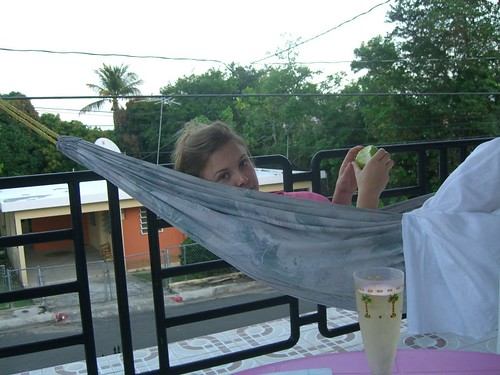
Relaxing in tropical paradise with a glass of bubbly and an apple can wait until after some of those chores are done.

Related Posts: Moving? Donate your items; Spring Cleaning Part Deux; Unexpected Volunteering

Photo courtesy of me and my 2006 vacation to Puerto Rico.

Monday, December 29, 2008

2009: The year to be more ....?

'Tis the season for those resolutions (except if you don't believe in them, like John). Traditionally I resolve to floss my teeth on a more regular basis. However ---gasp!--- I've been doing that this year! Well at least for the last three months.

Instead of making concrete resolutions like "I promise to go to the gym or play Wii Boxing 4 times per week," I'm thinking about making mind/attitude change resolutions. The idea is that if I ingrain something like a "be more patient" mantra into my every day routine, that my actions will then reflect that. I'm less of a thinker and more of a feeler, so if this mantra becomes part of my life, perhaps it will impact my actions.

Some research has postulated that changing just one "node" of the emotions that make up an attitude can change the whole attitude. With a different attitude, you're bound to behave differently.

The attitude-altering mantras I'm considering are as follows
  • Be more patient
  • Be kinder
  • Think before acting
  • What would INSERT MENTOR HERE [my grandma Mil] do?
  • Do I really need that?
Do you have any New Year's resolutions?

Related Posts: Top 5 New Year's Resolutions; How YOU doin'?; Green Tips for the New Year; Delayed Gratification; Who is Happier?

Monday, November 10, 2008

Clothing as Self Expression

With the upcoming OYFP charity fashion show this Thursday, my thoughts this week have turned to clothing. Just exactly why do we take it so seriously? And when does this obsession (for some of us) start?

In every culture, communication is not just what comes out of our mouth, it's our body language, it's how we fashion our hair, it's who we gather around us, it's what we put on our bodies, that communicates our message to those who know us (or don't).

Typically we start to become more aware of what we put on our bodies when we're teens. "Mom, I cannnnn'tttttt wear that!!!!! NO NO no NO No No!" This is the period when we're a little bit lost (psychologically) and trying to fit in with our identified group until we figure it all out, and it is of upmost importance we don't misstep, though invariably we always do.

Really, though, this doesn't change much even as we age. We continue throughout our lives to wear clothing similar to that of our friends, or perhaps similar to that of people with whom we would like to be friends. Researchers have postulated that clothing helps us satisfy our "higher order needs" of belonging and self-esteem. Some adults take it even farther - for them, clothing has been found to contribute to a sense of well-being or quality of life.

Think about it - we all have that favorite t-shirt or dress, and it's not only because of how it fits, but because of how it makes us feel. Even guys who proclaim "I don't care what I wear" can't help but feel good when they're wearing that blue tshirt that they know makes their eyes look good, or a suit that makes them look sharp.

So. Where do you fall on the scale of caring about what you wear? Or don't you?

Related Posts: Who is Happier?; How to be Happier
Related Events: OYFP Fashion Show, Nov 13 from 8 PM to 11 PM. Tickets are just $20, all proceeds go to Christopher's Haven.

This blog post was based on research I read about from the paper Clothing in the Self-System of Adolescents by M. Suzanne Sontag, Mihaela Peteu, and Jongnam Lee (1997).

Friday, October 24, 2008

There's nothing like a warm cup of coffee

With it starting to get really cold here in Boston, I thought a little heart warming post was all we need.

A study recently conducted by Yale University showed those who were physically warmer were more likely to be warm or generous to other people. Researchers rode the elevator up with their recruited volunteers and asked the recruit to help out by holding their cup of coffee while they wrote down the name of the recruit on their clipboard. Sometimes it would be a hot cup of coffee, sometimes it would be an iced cup of coffee.

These recruits were then asked to rate personality traits of a fictitious person. Those who had the warm cup of coffee rated the person with more generous personality traits than those that held the iced cup of coffee. They conducted other studies as well but all came up with the same result that your physical warmth was related to your psychological "warmth".

So does that explain the unfriendliness from many of the people in the Northeast? Everyone is physically cold, especially this time of year, which tends to make people more psychologically cold. I can understand that, who wants to take time to go outside and chat with neighbors/strangers, when that wind is biting at your face.

It is true I have met most of my new neighbors by doing outside activities (i.e. walking the dog, painting the porch), while it has been warm out. People were out and about enjoying the warm weather. When it is cold out everyone retreats inside to stay warm and creates less of a chance of interacting with the community.

So how does one do more good for the community and affect those around you when it is cold out? Can be as simple as buying a neighbor/stranger a cup of coffee? What are your thoughts?

Related Posts: An Economic Recovery Plan, in a cup., Random Acts of Conversation, My Knights in Shining Denim, Who is Happier?, How to be Happier

Picture Courtesy of: http://www.digisky-photo.co.za/portfolio/portfolio_01.html

Wednesday, October 22, 2008

Voting 2008 - Are you making your decision based on looks?

We are drawn to good looking people, which is sort of common sense, right? A 2007 study by Florida State University showed that good-looking people capture our attention nearly instantaneously and render us temporarily helpless to turn our eyes away from them.

Interestingly: “If we’re interested in finding a mate, our attention gets quickly and automatically stuck on attractive members of the opposite sex,” said Jon Maner, an assistant professor of psychology at FSU, “If we’re jealous and worried about our partner cheating on us, attention gets quickly and automatically stuck on attractive people of our own sex because they are our competitors.”

So what does that mean for the presidential election?

Well, for the first time in a long time, we've had people of both genders seriously vying for the top (or 2nd to top) positions. Some of us are staring at the candidates because we're jealous, others of us are staring because we're attracted, but we're all staring because these candidates are under a microscope right now.

There has been a lot of attention paid to the candidates' looks, especially the female contenders, Hillary Clinton and Sarah Palin. I swear, if I hear one more thing about Mrs. Clinton's pant suits and "cankles," I'll scream.

Interestingly, however, it has recently come to light that the Republican National Committee spent about $150,000 on clothing, hair styling, makeup and other "campaign accessories" in September for the McCain campaign after Palin joined the ticket. They are planning on donating all clothing after the campaign is over, but does that make it ok in the eyes of the law?

Perhaps the RNC was trying to capitalize on Palin's famous good looks (named America's Hottest Governor by Alaska Magazine) - afterall, if we're drawn to [at least look at] attractive people, it couldn't hurt, right?

What are your thoughts? Should candidates spend $400 on haircuts? Is it (or should it be) legal for campaign committees to spend funds on their candidates' clothing?


Tuesday, October 21, 2008

Presidential Election and Free Speech

I spent a relaxing few days in the country this past weekend. Well, relaxing until politics, free speech, and morality came into play.

Sunday night, my mom's friend came into the house huffing and puffing and carrying a sign that she pulled up and threw into her car when she spotted it by a rotary on a drive to get some groceries. This wasn't just an ordinary political sign that said "Vote for McCain" or "Obama for Change."

The sign proclaimed, "Al Qaeda for Obama."

It's common to see signs proclaiming one group's or another's support of political candidates. Examples include "Catholics for McCain/Palin," "Arab Americans for McCain," "Veterans for Obama/Biden," or "Teachers for Obama."

My mom's friend was so shocked by what she saw on this sign, however, that she just grabbed the sign and ran. Would the sign be ok in her eyes if it were actually put up by a member/supporter of Al Qaeda, instead of who it likely was, which is someone who doesn't support Obama and is just trying to associate the candidate with a terrorist group?

Or either way, does that person have the right to put up any sign they please, the truth sign's contents put aside?

My personal optinion: Politics is a dirty business, but we shouldn't have to resort to tactics like associating one candidate with a terrorist group. Law-wise, though, we do have a thing called "free speech."

What do you think?

All signs are not controversial! Take a look at this non-partisan sign
encouraging people to get out and vote.


Related Posts: Are you making your decision based on looks?; Passive Electioneering; Presidential Election, Registering to Vote, and the Ballot Questions; Absentee Voting; A biased opinion?; Handgun Bans and Dogs; How to be Happier; Who is Happier?
Photo courtesy of robbmitchell.


Wednesday, October 15, 2008

Memo to CEOs: People care about causes

New research out from the Cone and Duke University's Fuqua School of Business shows that people will pay more attention to your advertisements if some sort of "cause" is associated with them.

The study was conducted on 182 individual who viewed either a cause-related or generic corporate advertisement for one of four brands, and then entered a mock convenience store where they could actually buy products.

The result? There was a 74% increase in actual purchases for a shampoo brand when it was associated with a cause, and there was a 28% increase in a toothpaste brand purchases when the product was associated with a cause in the earlier advertisement.

The lesson here? People care, or at least they want their brands to care. Or maybe it's just that the ads stuck out in their head because the message wasn't just the same old corporate jargon they're exposed to constantly.

Capitalists to the core would say "duh," this is how capitalism should work. Corporations are rewarded with $$$ by helping out a "cause." It pays to care, people.

So who needs non-profits, or governmental organizations? Riiiight.... well, maybe someday everyone will have all that they need...

What do you think? Have you ever made a purchase because of a cause-related ad that you saw?

Related Posts: Bringing Sexy Back~; A gift to remember; DesignGive - Creativity is a Gift
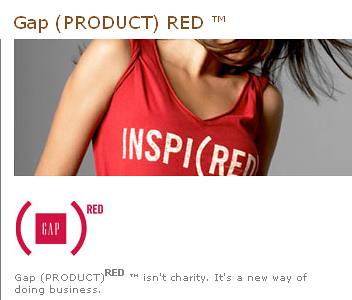
Above see two of the products that immediately came to mind when it came to "cause marketing" - GAP's participation in the RED product line, and Cheerios' heart disease donations.

Monday, August 25, 2008

Fish out of water - My experience in Nicaragua

While cleaning out my computer's hard drive the other day, I came across this essay I wrote about my experience volunteering in Nicaragua with the Foundation for Sustainable Development. Unlike most "volunteer" programs, you are actually expected to do work, and since I had a bachelor's degree in psychology, I was a psychologist!

More difficult than the work, however, was fitting in. This essay discusses how I finally managed to do that.

- - - - - - - - - - - - - - - - - - - - - - - - - - - - - -

I am 5’9”, blond, and have blue eyes. I could not look more different than Nicaraguans. The average Nicaraguan woman is 5’2”, brunette, and somewhat rotund from the deep-fried foods that are consumed with abandon. The average Nicaraguan man can’t be taller than 5’5”!

During my four month stay in Nicaragua, I could not have become more painfully aware of these simple physical differences. However, I found that the barrier to “fitting in” wasn’t the presence of the physical differences, it was my attitude towards them. I had to accept that I was different and acknowledge that I would never be able to camouflage myself. Only then was I able to feel and act like I really belonged.

The first few days in Nicaragua were the hardest. I was literally a fish out of water, tossed into a hot, dry, and worn-out land when I was used to a cool, placid, and plentiful ocean. Every molecule in my body screamed to be back where I could breathe! My previous world, the one where all of my friends and family still lived, seemed incredibly and unbearably far away.

After my vision cleared and I learned how to breathe, it became evident exactly how different I appeared. The people of Nicaragua (men especially) did their part to remind me as well. “Hey muñeca.. chela… ¿que pasa?” [Trans.: Hey doll.. whitey.. what’s up?]

Everywhere I went, people pointed and commented. More than once, children poked or slapped any part of my body that they could reach, to see if the “doll” was real. With all of these constant reminders, how could I help but concentrate on how different I was than “those people”?

Spending time with Aimee, a tall, blond Peace Corps volunteer who had been living in Nicaragua for over a year, helped me both acknowledge and accept my physical differences. She had learned to laugh, saying “When the two of us living, breathing muñecas walk down the street together, they just don’t know what to make of it! We’re unbelievable!” At that point, I spoke Spanish like a native Nicaraguan. I was so brown I looked like a sorority girl who had fallen asleep on her tanning bed. But I was never going to look like I belonged.

Looking back on my trip, I realize that this was the turning point. After I accepted my physical differences, I made a few Nicaraguan friends. More than one told me, “You’re different than the other gringos. You speak, you listen, and you understand.” We talked about music, parents, favorite foods, best friends, and what exactly the mayor was thinking when he proposed dumping the city’s trash in the nearby volcanic crater.

I will never take for granted how much easier life is when you physically fit in. I will never forget that in order become part of a culture different than your own, you must acknowledge that you are a fish and everyone else a mammal.

This is not exclusionary, pessimistic, or close-minded.

Robert Reich, who at 4’9” is one of the shortest politicians out there, starts every speech with a joke about his height. By acknowledging his physical difference, he makes it possible for everyone to stop concentrating on his stature and start concentrating on what he has to say.

Once you get the elephant in the room out of the way, it is possible to start forging friendships, really learning what it’s like to live within the new culture, and creating an experience that you will never forget.

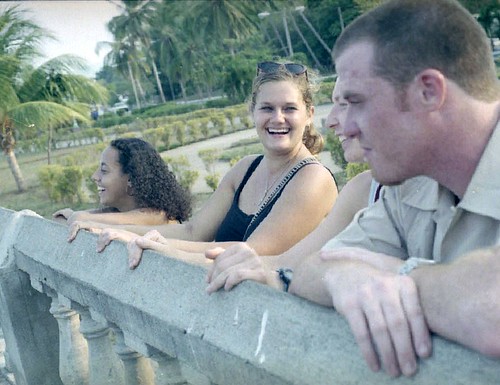
Nora, Aimee (the Peace Corps volunteer) and two of her friends at a park in Granada. The photo is a scanned in negative because back in 2003 I didn't have a digital camera.

Related Posts: International volunteering for teens; Food prices are rising; Chinese Earthquake - How to help; Global volunteering; Gap Year

Photos courtesy of Casey.

Tuesday, July 8, 2008

DWBDG: a case study

Although they're not exactly the company that co-opted the motto "do no evil", Microsoft is channeling it's products toward good causes. From yogurt to magazines, cleaning detergents and Facebook apps, many for-profit companies have begun marketing their products under the DWBDG (do-well-by-doing-good) philosophy.

Microsoft's foray into this venue isn't exactly breaking news (the project began in 2007,) the i'm Initiative promises to donate a portion of advertising profits generated from the MSN Live Messenger and Live Hotmail products to various causes. Users do need to opt into the program in order to participate, and can then select a benefiting nonprofit partner.

Now what's really interesting is the way that Microsoft has begun promoting the i'm Initiative. Under the guidance of their PR/media/ad agency, McCann, a young, hip, urban blogger named "Parker Whittle" has started the i'm Talkathon, tracking the Initiative's progress and offering up success stories and conversation starters.

However, Parker's not a "he". He's a "they."

At the bottom of this deftly produced blog is an upfront disclaimer:

...As you’ve probably guessed, this blog is fictional, but the causes, and the i’m Initiative most certainly are not. The purpose of this blog is to raise awareness of the i’m Initiative and the worthy causes it helps. If we rubbed you the wrong way in the process that wasn’t our intention, so “sorry, our bad.”...A herd of well-compensated legal professionals in Redmond, Washington, says we also need to tell you something:

The Parker Whittle character depicted herein is fictitious and his activities are described for illustrative purposes only.

Okay, Microsoft, you pulled a fast one on us again. But knowing how the agency world works, I'm willing to bet that this idea originated in the head of a junior account exec and not within the Richmond city limits. The disclaimer itself is also pretty honest and does somewhat neutralize the blow of yet another manufactured blog/blogger.

Come on, it's 2008. I thought we were over this kind of bullsh*t! I thought we'd learned our lessons, moved on, become more innovative than that! Did they really have to undermine a potentially good campaign with a half-assed effort?

The final question remains, and is re-posed by the Disclaimer, Is the i'm Initiative really helping these partners and causes? A quick look around the i'm website reveals little transparency of the program, including the planned share of donated profits and to-date progress.

GOOD Magazine, on the other hand (to reference a for-profit with a similar initiative,) includes an upfront explanation of their motives and the business logic is sound--it makes sense for a paper publication. GOOD also shows the growth of their contributions on their website, making you feel like part of a greater whole and allowing you the gratification of "seeing" your contribution (extra Smart Marketing points for seamless real-to-digital integration.)

Sigh. Microsoft, Sometimes I want to root for you and I don't even know why I try. Maybe your motto should be "do no stupid."

Friday, May 9, 2008

Non-Profit Auctions and Raffles

One of the things On Your Feet Project struggles with is the conflict between raising awareness of our non-profit partners among young professionals, and raising money for our partners. We try to keep our events low cost or free in order to get more people in the door. That way more of our target audience will become aware of the charities, and perhaps in the future volunteer their time or donate significant funds.

However, Seth Godin raises an interesting point with his post on "Marketing the charity auction." The idea is to get people to pay MORE than what the object (or event, in our case) is worth, versus trying to get a bargain. While I agree with his point, I wonder how exactly you get people to do that.

I suppose people are willing to spend more if they believe in the non-profit, or in the non-profit's cause. In our case, our young professional audience often times is not even aware of the non-profit, and/or are not willing to pony up major cash (more than $25) no matter the cause.

I think OYFP is in the business of convincing people to care, or showing them why they should care, kind of like those TV commercials with the faces of foreign children in poverty. "It only takes $1 a day..."

Instead of using kids' faces to guilt people into charity work, we try to convince our young professionals audience that volunteering can be fun, that it can be good for your career, and that giving will make you happier.

I won't lie - it's a hard sell. OYFP is committed to the cause, though. Hopefully, though, in the long run our work will lead to more people giving more. I can hope so, anyway.

Related Posts: We Rocked, Words for Sale?, Adventures in Recruiting

Friday, April 25, 2008

Who is Happier?

It turns out some people are happier than others, at least according to the "Measuring National Happiness" radio show I listened to the other day.

Duh.

Some people are always walking around with a smile on their faces. Cynical me, I think they're covering something up, compensating for a black hole of sadness inside. But it turns out they may actually be happier.

For example, researchers led by Alan Krueger noted that the general "moment to moment" happiness of men has increased over the past few years, which they attribute to the fact that men are gradually moving away from less pleasant like work to more to neutral activities like watching TV. Women have actually experienced a slight decline in their moment to moment happiness, which the researchers hypothesize is due to the increased stress of working outside the home.

So Frank from accounting may actually be happier than Lorianne, especially if Frank is older than Lorianne, and conservative politically. As you age, you learn to ignore non-constructive negative stimuli. (You can practice doing this with MindHabit's online game.)

It turns out people who are politically conservative are generally happier than people who identify themselves as liberal. Krueger and colleagues attribute this to their understanding that conservatives generally believe they are in control of their lives. They believe they can get ahead - there's nothing stopping them, not genetics, not the economic status of their families, not gender, not nothing, not nobody, not no how. Conservatives generally have rosier world view, and accept how things are.

Contrasting with this, Krueger said his research shows that to a certain degree, liberals tend to not to believe they are in control of their lives and their circumstances. They tend to attribute failure to succeed in society to factors in addition to just "personal initiative." This may be considered a more understanding and forgiving point of view, but Krueger postulates that admitting a certain lack of control over their own lives makes liberals less happy.

One could always argue, "Which came first, the chicken or the egg?" It is likely that 50% of the difference in happiness is due to other factors - religion and marriage contribute to happiness, and conseratives are more likely to be married and religious.

This isn't to say that in order to be happy, you should start being conservative politically.

Instead, be who you are - and be happy in it. Use your money to buy experiences, not stuff. Eating leads to increased happiness - and so does exercise (so you can happily maintain your waistline). Volunteer. Try to reach equilibrium with your status in life - accept where you are, while working constantly to achieve your next goal. (Incidentally, I noted this was common among people in India, who seemed very happy.)

You too can be happy... and hopefully already are.

Anyone up for a bike ride [exercise] for charity [giving] across Ireland [experience] followed by an organic feast [eating] in a castle [my dream]?

Related Posts: How to be Happier, Bigger and Better, Reflecting on ourselves

I look pretty darned happy here, if I do say so myself.

Photo of the smiling barn courtesy of BachsPics.
Photos of smiling children and jumping girl courtesy of Smazzle, aka me.

Thursday, April 24, 2008

How to be Happier

Last night as part of my No TV week, I listened to "Measuring National Happiness" on the NPR radio show "On Point." I was only half listening, but there were three points that caught my attention:

1. Americans are always in the "pursuit of happiness" and don't stop to recognize when they are happy (even if it's just for a few moments).

2. We can choose how we spend our time. Certain activities make us happier (especially those involving other people), why not choose to do those more often?

3. Abundant research shows that giving money to charity or volunteering is highly correlated with happiness. They are happier after the experience - and this happiness lasts longer than just the immediate moment of giving.

So. The lessons? Stop to smell the roses - recognize a happy moment when you're in it. Even if you're having a bad day, maybe your iced coffee that morning was delicious. Choose social activities rather than so called "neutral" activities like watching TV.

And finally, take control of how you spend your free time... and perhaps consider volunteering with OYFP. After all, studies show you'll be happier if you do so. ;-)

Photo courtesy of **Mellieboots**.

Friday, April 18, 2008

Turn Off Your TV Week - April 21 - 27

Don't let the boob tube rule your brain! Just Say No to TV, and celebrate Turn Off Your TV week April 21 through 27.

Sure, we all "don't watch a lot of TV," except that we do. It sneaks up on us. A whopping 66% of us watch TV regularly during dinner. According to a report by Reuters, the total average TV time per household in 2005-06 was eight hours and 14 minutes per day.

Like anything, it will be hard at first. What will you do without your Will and Grace re-runs while you eat your microwaved burrito? Or the Today Show while you apply your mascara?

But it will get easier. You'll remember that you meant to send your Grandma a card. You might pick up that book you were in the middle of last summer. You'll call a friend and go play frisbee. Earth Day this year falls smack dab in the middle of national Turn Off Your TV Week. Celebrate both by planting some trees... or if you live in the city, potting some plants.

Or maybe, just maybe, you'll go to the gym. After all, the rise of TV's popularity coincided with the rise in obesity. This is a second chance at that New Year's resolution!

I'm looking forward to the challenge. If my mom was right, my "square eyes" (commonly acquired by watching the television) will go away by the end of the week! Perhaps a few pounds will too...

Take a break from the television - you'll be surprised by what you accomplish. Or where your mind wanders. Or the friends and family you'll suddenly have time for. And let us know what you do instead of watching TV!

Don't let this be you!

"American children and adolescents spend 22 to 28 hours per week viewing television, more than any other activity except sleeping. By the age of 70 they will have spent 7 to 10 years of their lives watching TV."
-- The Kaiser Family Foundation


Broken television courtesy of Jerk in the Box.
Square eye photo courtesy of Roll the Dice. Take a close look at his iris...
Couch potato photo courtesy of
Brymo.

Monday, April 7, 2008

Tend-and-Befriend on the shoulder of 93 South

The car jolted violently. I screamed, rather loudly. I yelled to my boyfriend, "Pull OVER, PULL OVER!" Something was wrong.

It was 10:00 PM, we were on 93 south just inside Woburn, [now] in the shoulder, along with 10 other cars. Within minutes it became 20 cars. Then 30 cars. We quickly lost count.

We got out of the car to inspect the damage.

"Oh, honey, we have a flat tire. I mean, actually, TWO flat tires. On the same side."
His response: "What the f&*#$?!"

I won't lie, I was trembling and sort of jittery. I started calling tow places, then the state police, while Terrence talked to everyone else, all of whom had two flats on the right side of their car. Turns out within about a 10 minute span, we had all hit a large piece of lead or concrete pipe that was in the middle of 93 South.

What the f&*#$ is right.

We all paced in the shoulder, up and down, back and forth, waiting for the police to get to our cars, talking about what we saw, watching as a rubber necker slammed into the car in front of him, adding two more cars to the ones waiting to be towed. The guy behind us did what every Bostonian does when he or she sees something that could be sensationalized: Called Fox 25 News.

As terrible as the night was, no one was hurt (even the rubber necker). As is common in situations like this, all of a sudden strangers who would probably barely give each other the time of day (this is Boston, after all), were talking together, laughing about our bum luck, and wondering whether or not the state would actually reimburse us for the damage like the state trooper said.

We came together in this time of stress, and experienced what some psychologist call "tend-and-befriend." According to Wikipedia: "This tend and befriend response refers to the fact that people often manage threats by caring for offspring and seeking social support in time of stress (Taylor et al. 2000)."

The alternative to tend-and-befriend is the more commonly acknowledged "fight or flight" response. I certainly tried to "fly" - I called a bunch of towing companies before realizing that the state police would take care of it. We certainly weren't "flying" with two flat tires, anyway.

It is refreshing to experience a sense of community and friendliness in a place where people protect their shoveled out parking spots to the death, and honk if you're one second behind slamming the gas at a green light. Don't get me wrong - I'm a Bostonite through and through - but it is nice to know that we have that "tend-and-befriend" in us below our rough 'n' tough exteriors.

To see Channel 7's coverage of the event, watch their video footage of the incident.


Photograph courtesy of Tudor Hulubei

Thursday, February 21, 2008

Lack of Motivation

Let's face it we've all had those days when your motivation is not there. Perhaps its the bad weather, maybe you haven't had your Starbucks in the morning, but you look at the mound of paperwork on your desk and you don't really care to do it at all. It's Friday, and studies have shown that it is not the most productive day of the workweek.

So what motivates you, Boston, to get on your feet? Is it that poster with the cat that says "Hang in there"? Is it because it's for a good cause? Is it because it's something you're passionate about? Maybe it's because when you're out in the town and someone ask you the proverbial question, "What do you do," you can have an answer. A friend says she does it for the feeling of accomplishment and doesn't like leaving things for later.

Psychology says what drives you to accomplish work goals is the underlying drive to satisfy your basic needs such as hunger, shelter, comfort, etc. In other words you work to live and if you don't work, you don't have the money to pay for shelter, food, etc.

So as I procrastinate more at work... I would like to hear what other people feel inspires them to get up and do something.

Sunday, February 3, 2008

Creating Your Own Online Community Online - Non-Profits

A few weeks ago, Liz wrote about how in order to be successful and both retain and gain new donors, non-profits need to have a community for their donors. I find this a fascinating topic, and believe it's true. Non-profits typically have events ranging from casual teas to galas, send regular mail, and call their donors in an effort to create and maintain this community.

Much research has been done on why we like communities, and what we're looking to get out of them. Essentially, once our basic needs are met (shelter, substinence, and safety), we look to fulfill our emotional needs, which include affection, understanding, participation, recreation, creation, identity, and freedom (Source: Max-Neef, Fundamental Human Needs). Communities help us fill all these needs, from the basic to the more abstract.

New research from Communispace posits that those more abstract needs can be met by small, highly focused, online communities. Of course, because Communispace is in the business of providing businesses with the software and technical know-how to create their own online communities, so they're no doubt biased.

However, I think they correct. By providing individuals with the opportunities to connect to people who are similar to themselves, share information, and form long lasting relationships, businesses and non-profits are moving above and beyond their traditional role. They are integrating themselves into people's lives - a marketer's dream!

Non-profits do not take advantage of this often enough. Even when researching for this blog post, I had a hard time finding examples. The AARP has message boards (and a strong community), but that's not exactly where I would hang out online. Some non-profits (like us! or Interplast, which helps impoverished people get much needed surgeries) have blogs, which are a step in the right direction... but usually fall short on fulfilling the affiliation/sense of community needs as blogs are more about putting out information, and less about receiving.

So. If you're a non-profit, where do you start if you want an online community?

First, determine what it is you want to get out of the online community. Is it member retention? Donations? New members? Industry recognition?

Next, assess the demographic you are trying to attract. It may make more sense to create a community within another community that has already been set up (Facebook or Bebo, for example) than to create your own. Or, perhaps your demographic is not as comfortable in online communities, and it might be good to start with an email campaign to "warm up"
your audience before launching the community.

Thirdly, list out the necessary resources. Do you need to recruit some IT help - perhaps an intern? Make sure the infrastructure is easy to update, and that you will have access to help in the future.

Fourth - Launch the community internally. Work out all the bugs. Make sure your web analytics system is working correctly. Get some content up there.

Fifth - It's time to set that community free! Launch to all your members. Connect with them in the community - engage them. Interact. You will have to get the ball rolling.

Sixth - Promote the heck out of it. If your goal is to attract people outside of your current donor network, participate in other online communities. Make sure you're adding value to the community, not just spamming them with your promotions, though. Invite noted people in your field to guest post. Discuss events that you attended, and invite those people who attended with you to view the post.

Seventh - Never stop trying. It's not easy. Even a blog takes a lot of effort. But at the very least, in the process you will learn more about your audience, and more about the people you work/volunteer with. I think the OYFP team has gotten more out of this blog than our readers have - our online community was/is intended to engage our members, but has had the side effect of engaging us more fully in OYFP itself, and making us even more dedicated to our cause.

Best of luck out there - your online community is just waiting to be formed.

Related Posts: Non-profit networking Aug 13; Who is Happier?; Eyes Wide Shut

Thursday, January 24, 2008

Eyes Wide Shut

you'd be surprised by the range of skills teachers are asked to teach to their students. for example, yesterday, while walking down the hall with my class after lunch, i had to explain to a child that when you walk, you've got to walk with your eyes open.

but then, i got to thinking (i know, dangerous). the other day, liz posted about creating non-profits that instill a sense of community in its "consumers" in hopes of not simply recruiting them but also retaining them. while i agree that non-profits must transform donors, volunteers, members, and similar interested parties into "champions of the cause" for sustained success, i also wonder how effectively non-profits can penetrate deeply embedded principles of consumerism (as well as other life-structuring ideologies)...

repeatedly, we bemoan the seemingly high ticket prices of events which are being held to benefit populations that are disenfranchised, marginalized and frequently forgotten by the sane, healthy and (more often than not) unintentionally oblivious rest of the world. but then we don't question dropping easily $50 for dinner or an even heftier sum for a night of fleeting inebriated revelry (or maybe we actually did question but then answered with a resounding opening of the wallet).

we even go so far as to offer our money in a concerted effort to save a small business seized by the government in response to unpaid back taxes because we "care about having a city that is filled with more than global chains" and "[support] an enriched urban life" (check out the front page of the cambridge chronicle for more info about that doozy.).

i'm certainly not saying people don't have the right to spend their money in whichever manner they wish, and i'm definitely not saying i'm not guilty of unbalanced spending either (heck, my whole life is a little helter-skelter).

but i do wonder... have we truly matured beyond my six-year-old student? are we walking with our eyes open? 'cause if we were, i'm sure we'd be spending our time, money, and lives much more differently when we saw what, or more importantly who, was around us. we may even become those long-term, committed "champions of a cause" (and who doesn't want to be a champion?!).

Tuesday, January 15, 2008

Wine: Cheap can taste better?

OYFP frequently hosts wine tasting events. In fact, we have one planned for the springtime, which is yet one more thing to look forward to about the end of winter.

In preparation for more wine and guarding your wallet after exuberant holiday spending, you may want to consider this new research from the California Institute of Technology in Pasadena. The work shows that the level of enjoyment people derive from a sample of wine is higher when they believe the wine that they are tasting is more expensive. The key word being "believe," since the researchers arbitrarily gave each wine sample a price.

I pulled a "pour a decent box wine in a decanter" trick at a recent party, and people seemed to enjoy it just fine, not knowing it was from the oft stereotyped (but more environmentally friendly) box wine industry.

The lesson here? Cheap wine can taste just as good as expensive wine, just as long as you don't know it's cheap. Buy a few bottles of varying prices at the package store, scrape off their price tags (or their labels), mix them up, and open at random to enjoy! Don't let the price change your mind.

Anyone have some cheap wine recommendations aside from the "two buck chuck" from Trader Joe's?

Wednesday, January 9, 2008

Knowledge & Resources.

I love to cook. As a child, I learned while helping my mother in the kitchen. As a teenager, I occasionally prepared meals for my family. In college, I regularly cooked for roommates. Over the years, I’ve developed this skill and until recently, I considered myself a better than average cook.

I now realize that I don’t know as much as I previously thought I did about cooking. This realization was brought about by two things: Knowledge and Resources.

Knowledge. When I’m not cooking or eating, I’m watching shows about cooking and eating. Watching a master chef skillfully prepare, cook and plate common foods with exotic ingredients is a treat. Watching someone like Bobby Flay is educational as well as exciting. Some of my favorite Food Network shows are:

Barefoot Contessa – hosted by Ina Garten
Boy Meets Grill – hosted by Bobby Flay
East Meets West With Ming Tsai – hosted by Ming Tsai
Iron Chef America – hosted by Alton Brown
Jamie at Home - hosted by Jamie Oliver, premiering January 12, 2008
The Next Iron Chef – hosted by Alton Brown and Mark Dacascos

Resources. As a gift I recently received a Wüsthof Classic Hollow-Ground Santoku, 5", with Sharpener. This knife has changed my life. Not only has it improved my ability, it has highlighted my limitations... in the kitchen. It has also made me want more knives of different shapes, sizes and uses.

Having knowledge of a skill, the resources to develop that skill, and the desire to learn is what sets a master apart from an amateur.

What do you like to do? Are you a master of anything?

Thursday, January 3, 2008

I don’t do resolutions.


The New Year is a time for reflection. Traditionally, we reflect on the past years events and look forward to the year ahead. This is also the time many people make New Years resolutions. I don’t do resolutions.

When something is labeled a resolution it isn’t really a main priority. If it is a main concern then why wait until the last day of the year to face it? I applaud anyone who makes a resolution and actually sees positive long-lasting change. But, for the most part, most resolutions are broken. In the US the most popular resolutions are:

Lose Weight
Pay Off Debt
Save Money
Get a Better Job
Get Fit
Eat Right
Get a Better Education
Drink Less Alcohol
Quit Smoking Now
Reduce Stress Overall
Reduce Stress at Work
Take a Trip
Volunteer to Help Others

Make small changes in your everyday life to achieve your overall goals. Don’t make huge broad resolutions. You can start today, click here to
Volunteer and Help Others.

All the best in 2008.